

Channel 1: Ocean Waves
Channel 2: Furnace Fire
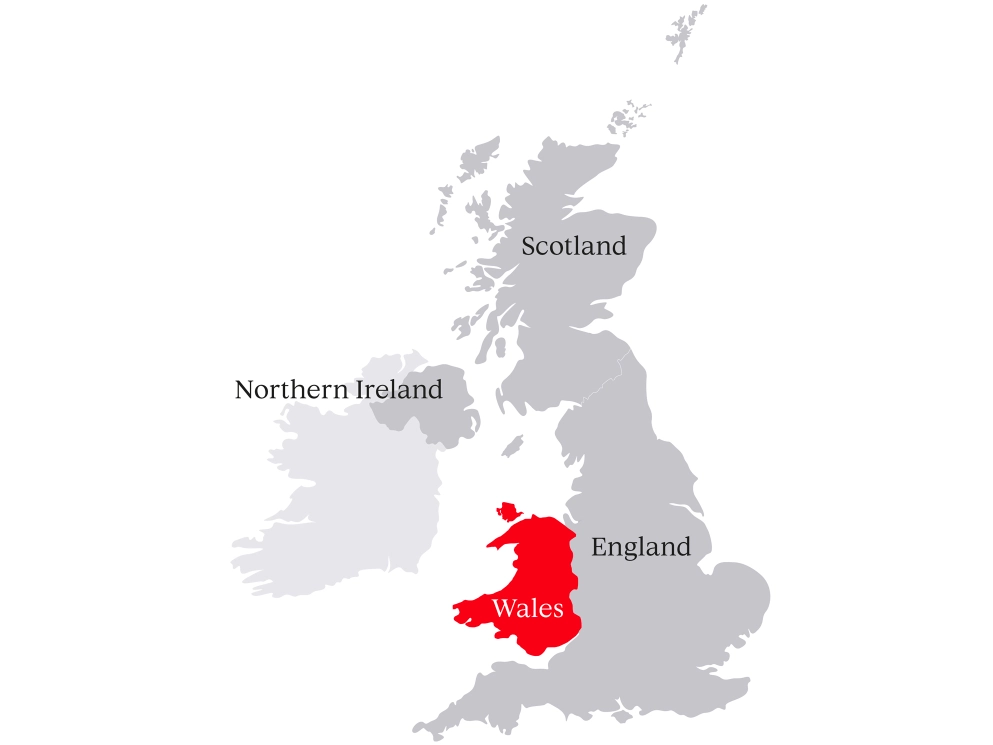
George Childs, Dowlais Ironworks 1840
Dowlais Ironworks, South Wales (1840) — The Human Crucible
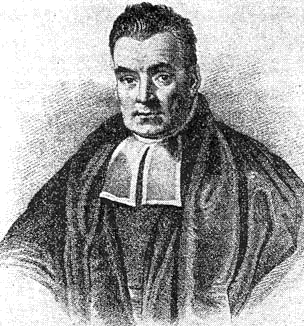
Portrait of Thomas Bayes

Thomas Bayes

Thomas Bayes (/beɪz/ BAYZ; c. 1701 – 7 April 1761) was an English statistician, philosopher and Presbyterian minister who is known for formulating a specific case of the theorem that bears his name: Bayes' theorem. Bayes never published what would become his most famous accomplishment; his notes were edited and published posthumously by Richard Price.
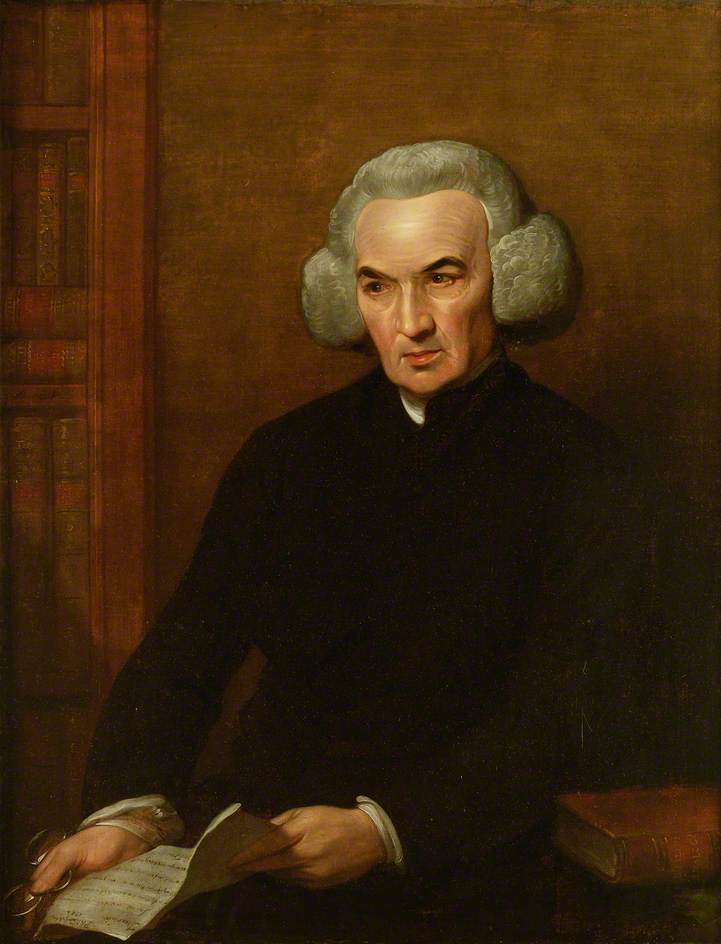
Portrait of Richard Price

Richard Price

Richard Price (23 February 1723 – 19 April 1791) was a British moral philosopher, Nonconformist minister and mathematician. He was also a political reformer and pamphleteer, active in radical, republican, and liberal causes such as the French and American Revolutions.

An Essay towards solving a Problem in the Doctrine of Chances title page

An Essay towards solving a Problem in the Doctrine of Chances

Following Bayes' death in 1761, his family asked Richard Price to examine his mathematical papers. Price immediately recognized the profound philosophical and statistical value of Bayes' work on inverse probability. Over the next two years, Price meticulously edited the manuscript, added an introduction exploring its theological implications for causal reasoning, and submitted it to the Royal Society. Read on December 23, 1763, this posthumous collaboration introduced what would become known as Bayes' Theorem to the scientific world, fundamentally transforming how human beings calculate probability in the face of incomplete evidence.

Portrait of Abraham de Moivre

Abraham de Moivre

Abraham de Moivre (26 May 1667 – 27 November 1754) was a French mathematician known for de Moivre's formula, which links complex numbers and trigonometry, and for his work on the normal distribution and probability theory. His book The Doctrine of Chances was highly prized by gamblers of the era, establishing the mathematical foundations for predicting outcomes when the underlying probabilities are already fixed and known.

De Moivre showed: if you know the true, underlying probability of an event, you can accurately predict the long-term outcomes of many trials.
Rolling dice Dice
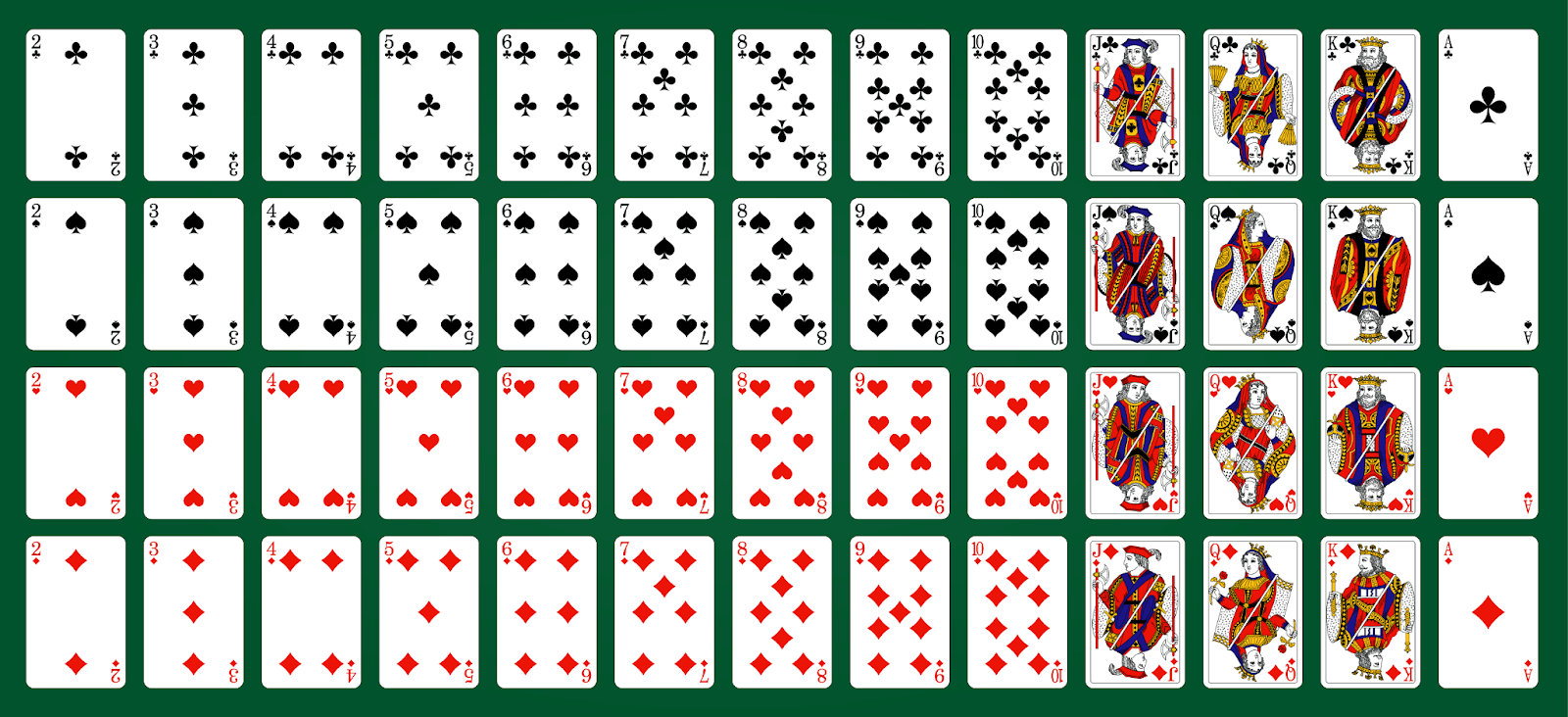
Playing cards deck Cards

For dice and cards, we can know the exact, fixed probabilities of possible outcomes. But in life, we hardly ever know the exact probabilities of most things in our future.

What Bayes Solved

Instead of assuming probability is known and predicting outcomes, Bayes started from ignorance—we observe data (successes/failures) and ask: what is the probability?

His method treats probability as a learning process: starting with estimates, gathering observations, and updating the estimates.

For inference to be strong, structures underlying the data must remain relatively constant. If they change, the inference becomes less reliable, for each temporal step.
Strategy as a Bayesian Engine

This fundamental logic applies directly to any dynamic system within our shifting environment. In business, operations, or strategic planning, the core constituents that drive future success are never fixed—they carry current estimated values that must continuously adjust as fresh information enters the system.

The Two Streams of Revision:
  • 1. Passive Calibration: Some estimates are modified automatically with the mere passage of time as market cycles mature and historical baselines settle.
  • 2. Proactive Surveillance: Other estimates are actively forced to evolve by deploying rigorous research programs, debugging workflows, and intentional analytical discovery.

The ultimate strategic instrument is therefore a plan, detailed enough to serve as a rigorous operational map, yet flexible enough to rewrite its own parameters when confronted with new data.

At every step, we hold a fluid set of probability estimates that change strictly as a function of change itself.

Candidate Does it survive?
Fixed probabilities
Single best estimates
The updating process

When the substrate is stable, estimates converge tightly—the target doesn't move, so confidence grows. When the substrate changes, estimates lag behind the new regime; accuracy decreases until the process catches up again. What survives through both states? Not the estimates. Not the precision. Only the estimating function itself—the capacity to revise, adapt, and continue measuring.

Thomas Bayes proved a simple, radical truth: you don’t need perfect foresight to navigate a changing world—you just need a process for updating what you know based on what you see. He took statistics out of the fixed, artificial certainty of dice and cards and gave us a mathematical engine for learning from raw reality.

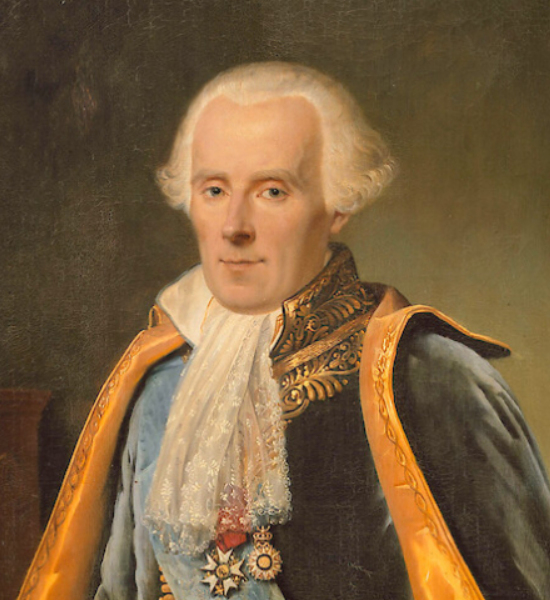
Portrait of LaPlace

Pierre-Simon Laplace

A few years after the death of Bayes, French mathematician Pierre-Simon Laplace (1749–1827) took Bayes' raw insights and transformed them into a massive scientific superpower called inverse probability. Laplace used this new engine to calculate the mass of Jupiter, predict planetary orbits, and analyze medical data. He proved that even if two people start with wildly different initial guesses, their estimates will eventually converge on the exact same truth as real-world data piles up.

Portrait of Fisher

Ronald Fisher

For over a century, this adaptive approach dominated science. But by the 1920s, a massive backlash began. A new school of thinkers—led by a fiery statistician named Ronald Fisher (17 February 1890 – 29 July 1962) wanted static, absolute answers. They demanded a world of rigid, fixed rules and explicitly mocked the Bayesian approach, with Fisher famously dismissing the idea of learning from ignorance as "fallacious rubbish." They tried to bury the updating process under mountains of rigid formulas. They wanted single best estimates. They wanted a stable target that never moved.

The Advent of the Digital Age

By the 1950s, however, the concept roared back to life under a official new name: Bayesian statistics. A vanguard of philosophers and economists realized that in a world of shifting substrates, treating probability as a "degree of belief" that changes with new evidence was the only logical way to survive.

The next phase came in the 1980s, when computers became powerful enough to handle the immense, relentless math required to run millions of continuous updates simultaneously. Today, this is no longer just a theory about historical charts or market stalls. It is the core engine driving modern artificial intelligence, machine learning, and advanced global forecasting models.

Scenario A: The Lone Chai Seller

Imagine a single vendor running a small tea stall. He has to brew basic tea, keep track of spice inventories, and serve snacks. His mental and physical energy is strictly finite. He cannot perfectly optimize all these shifting variables simultaneously while managing boiling water and demanding customers.

His Strategy: He completely separates doing from thinking. He never tries to change his business strategy while the stove is hot. Instead, he blocks out a single 15-minute window at the 2:00 PM cash count to evaluate the day's signals and plan for tomorrow.

Is this approach Bayesian-consistent?
Is it the best possible approach?

Click here

It is Bayesian-consistent because he is updating. By blocking out that time to look at the day's signals and change his plan for tomorrow, he is running a classic update. He takes his initial guess about what would sell, crosses it with the actual data from the day's sales, and creates a revised plan.

While it is Bayesian-consistent, it is not necessarily the best. There is a whole set of more optimized approaches, as well as vastly worse ones, but he is fundamentally on the right track.

The Two Strategic Traps He Successfully Avoids:
1. Continuous Panic Trying to run a continuous update on every single data point—changing the recipe because one customer frowned. This causes infinite loops and immediate cognitive burnout.
2. The Frozen Prior Ignoring all signals entirely and running the shop the exact same way for ten years until a sudden market shift forces an immediate bankruptcy.

Scenario B: The Shouter vs. The Watcher

Now consider a crowded, competitive public bazaar subject to sudden environmental shifts (wind drafts, temperature drops, pedestrian turnover). Two independent sellers with identical inventory but highly asymmetric operational strategies are competing for the exact same pool of fast-moving commuter attention.

The core issue for both is balance: how much do you focus on the current moment versus the future?

How do you divide your energy so you can survive today AND prepare for tomorrow?

Click here

The right ratio is completely dependent on how fast your environment is changing. The more chaotic the world around you, the more energy you have to pull away from immediate execution and reallocate toward surveillance:

In a Highly Stable Environment: The substrate doesn't move, so the optimal split might look closer to 95/5. The target isn't shifting, allowing you to spend almost all your energy executing.
In a Highly Volatile Regime Shift: The environment is melting down, so the optimal split might aggressively flip to 60/40 or even 50/50. You drastically slow down execution because your current map is losing accuracy by the hour, forcing you to spend massive energy searching for a new baseline.

The Quantitative Horizon

Up to this point, we have explored the world of Thomas Bayes entirely through narrative, philosophy, and strategic logic—with no math at all. We have focused on the mindset of adaptation, the necessity of tracking environmental shifts, and the humility required to manage uncertainty.

But when you step past the prose and actually inject the formal mathematics, the terrain changes entirely. By assigning hard numbers to your priors and running the exact equations of inverse probability, the resulting quantitative findings are nothing short of astounding. Counter-intuitive truths emerge, hidden patterns reveal themselves, and what felt like abstract strategic intuition transforms into absolute mathematical certainty.

Who is this journey for? It is for anyone who wants to conduct Bayesian inference on real-world data but has been discouraged by traditional, heavy statistics. The resources below offer a lighter touch.
Recommended Prerequisites:
  • • Algebra: Basic manipulation of symbolic expressions is widespread.
  • • Products & Summations: Used for writing down likelihood and log-likelihood functions.

A Note on Calculus: Early approaches to this math were packed with complex integrals that could be terrifying. Fortunately, because modern Bayesian inference relies on computational sampling rather than hard manual calculation, an intimate knowledge of calculus is a 'nice to have', but no longer essential, particularly in initial phases of learning.

Recommended Open-Access Resources for Further Study:

Ben Lambert's Student Guide (PDF Textbook) Bayes Rules! Introduction (Web Text)